Sensored vs sensorless RC drift motor UK: when low-speed control changes
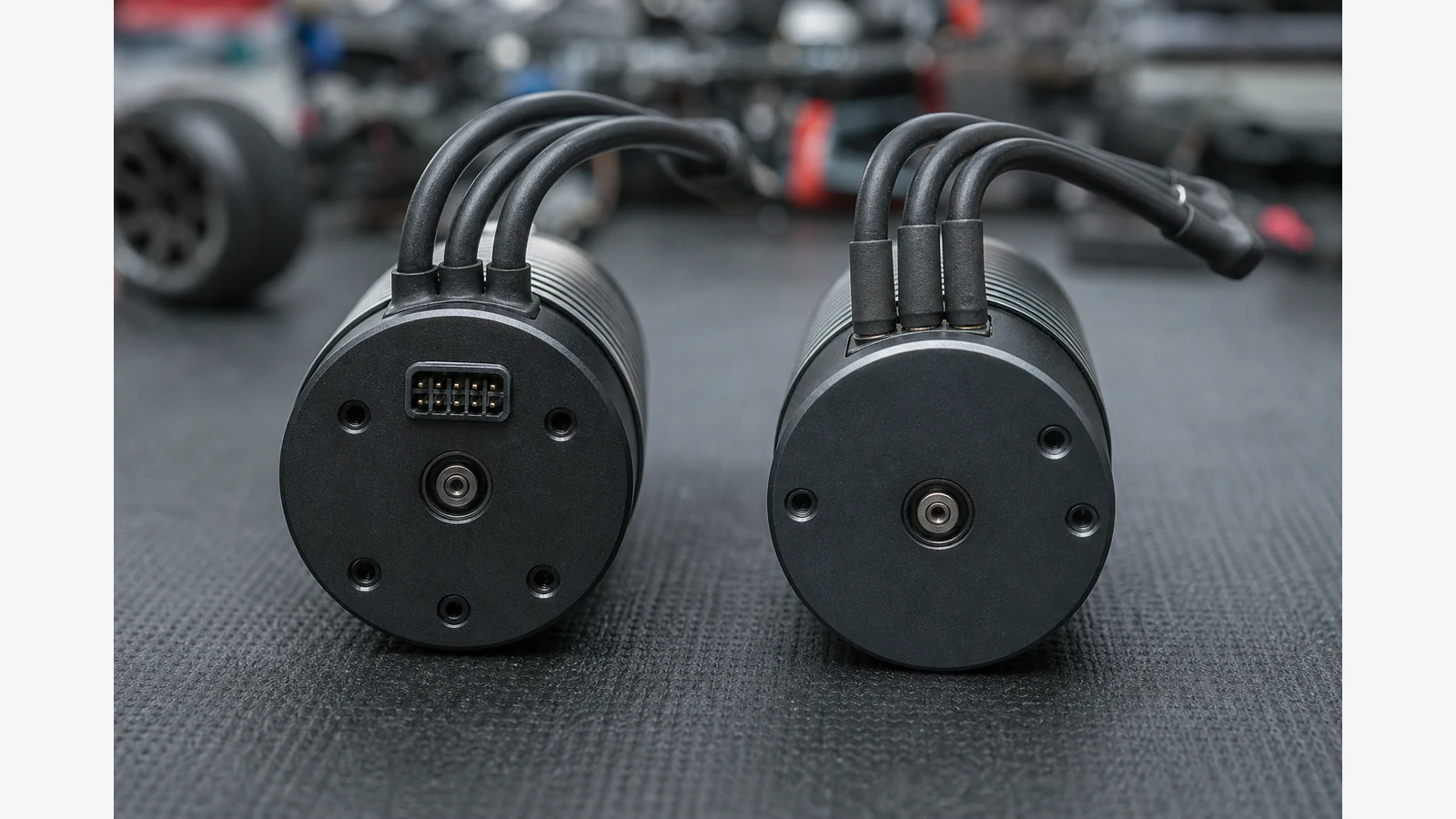
For UK 1/10 RC drift, a sensored brushless motor is the practical default when you need smooth crawl-to-throttle control. Sensored cans feed Hall-sensor rotor position to the ESC from zero RPM, which cuts the low-speed cogging that sensorless back-EMF startups often struggle with on club surfaces.
That difference matters because drift is a low-speed precision sport. Sensorless stutter fights slip-angle hold and makes gyro corrections feel late. UK club guidance treats a sensored brushless motor plus a working sensor cable as the everyday setup for that reason — see the RC Drift UK motor and ESC pairing guide.
What changes at low throttle
Sensored motors use Hall sensors so the ESC knows rotor position before the motor is spinning hard. A clear technical walkthrough is in the Castle Creations sensored vs sensorless motor explanation. Sensorless systems infer position from back-EMF once the motor is moving, which is fine for many high-RPM uses but often feels coggy in the drift idle-to-creep range.
None of this guarantees “zero cogging” on every chassis. Drivetrain binding, a damaged sensor lead, wrong gearing, or an ESC without a sensor path can still spoil the feel. Treat sensored as the better starting architecture for precision drift, not a magic fix.
Decision table for UK buyers
| Factor | Lean sensored | Stay sensorless |
|---|---|---|
| Use-case | 1/10 RWD/AWD drift, club practice, tandem | High-RPM bash, boats, non-precision runs |
| Low-speed feel | Need predictable crawl and slip-angle hold | Mostly mid/high throttle, little crawl work |
| ESC | Sensored ESC with Hall/sensor port available | ESC has no usable sensor path |
| Cable routing | Can route and strain-relieve the sensor lead | Cannot protect a sensor lead on the chassis |
| Wet/dust risk | Indoor carpet or dry outdoor concrete | Constant water/mud exposure without sealing plan |
Who should stay sensorless
Keep a sensorless package if you are not doing precision drift, your ESC cannot read Hall sensors, or the car is a high-RPM basher where low-speed finesse is not the job. For club drift nights, sensorless usually costs more frustration than it saves.
Before you buy
Confirm the ESC supports a sensored motor, budget for a clean sensor-cable route, and pick turns for your surface rather than chasing the lowest T number. If you are planning a full electronics refresh, use the RC motor upgrade checklist for UK drifting and the RC drift motor and ESC pairing guide. When you need to check a live 540 sensored drift offer and fit notes, review the SurpassSen V5R 540 sensored brushless motor detail page.